

 Table of Contents


Section One: Máh-Kú
Máh-Kú: A stone castle and a village
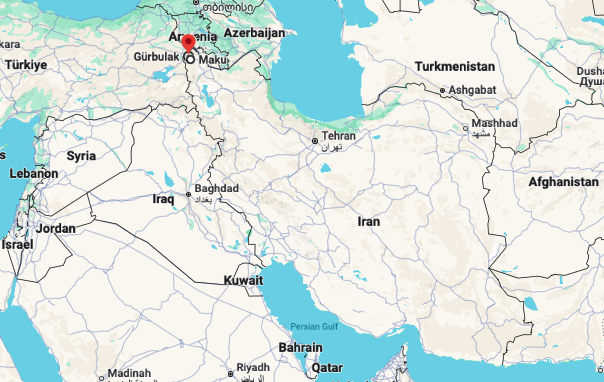
In the furthest remote northwestern corner of Írán and far from all centres of activity sits Máh-Kú, a stone castle near the top of a mountain, at the foot of which lies a small village bearing that name. Located in the mountainous province of Ádhirbáyján, it is about 10 miles [about 16 km] from the border of what is present day Turkey [at that time the Ottoman Empire]. It is also not far from the border of what was then the Russian Empire. [The regions close by have now become the independent states of Armenia & Azerbaijan].
In the 1840s, the majority of the residents of the region of Máh-Kú were Kurds, who mainly follow the Sunní branch of Islam. There has always been an antagonistic relationship between the Shí’a and the Sunní. The Shí’a were [and are still so today] the vast majority of the population of Írán. The oppression of the Sunní Kurds in this northern area by the Shí’a meant that the Sunní Kurds of this area were especially antagonistic to the Shí’a. The Sunní Kurds identified the siyyids