

 Table of Contents


In the 1840s, the majority of the residents of the region of Máh-Kú were Kurds, who mainly follow the Sunní branch of Islam. There has always been an antagonistic relationship between the Shí’a and the Sunní. The Shí’a were [and are still so today] the vast majority of the population of Írán. The oppression of the Sunní Kurds in this northern area by the Shí’a meant that the Sunní Kurds of this area were especially antagonistic to the Shí’a. The Sunní Kurds identified the siyyids [descendants of the Prophet] as leaders amongst the Shí’a and so hated them in particular. It was with this in mind, that the Grand Vazír had picked Máh-Kú as the place to send the Báb, known to all as the Siyyid-i-Báb. The warden of the prison castle of Máh-Kú was ‘Alí-Khán . Although a Shí’a himself [positions of power were only given to the Shí’a], his mother was a Kurd and the family’s maternal side were Kurds. He was therefore respected and obeyed by the Sunní Kurdish people of the area.
The Báb arrives in Máh-Kú
The Báb arrived in Máh-Kú with two companions: Siyyid Husayn of Yazd [who acted as the Báb’s amanuensis] and his brother Siyyid Hasan [who acted as the attendant doing daily chores]. The Báb had selected them when the order came from the Sháh to send Him to Máh-Kú. The Báb and his two companions were confined in the castle on the mountain.
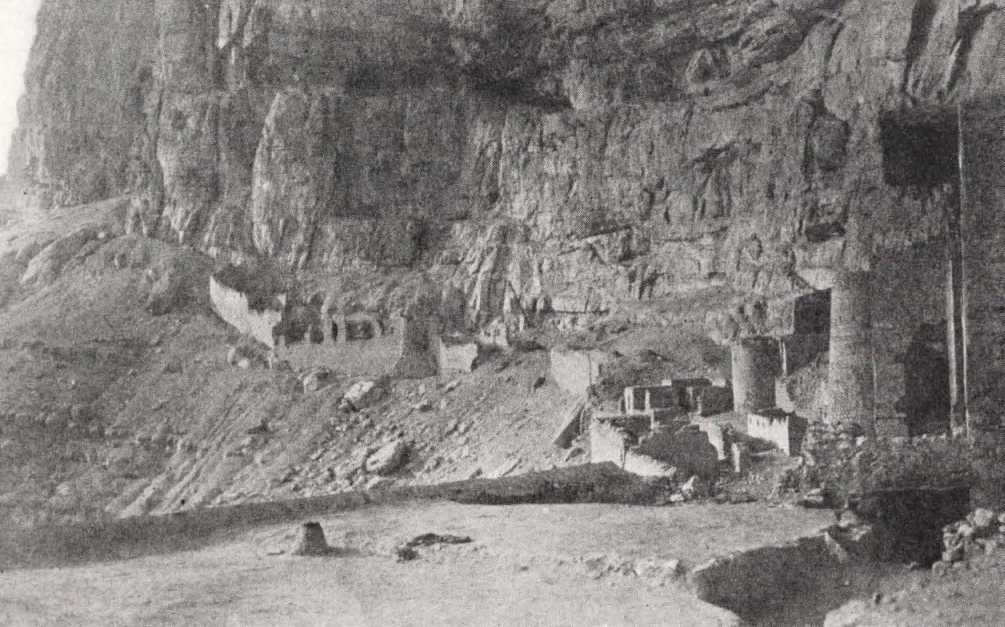
Ruins of the Máh-Kú castle. The village is not seen in this photo [it is further down the mountain slope]. Archival photo. 1ACT6
255 / 803