

 Table of Contents


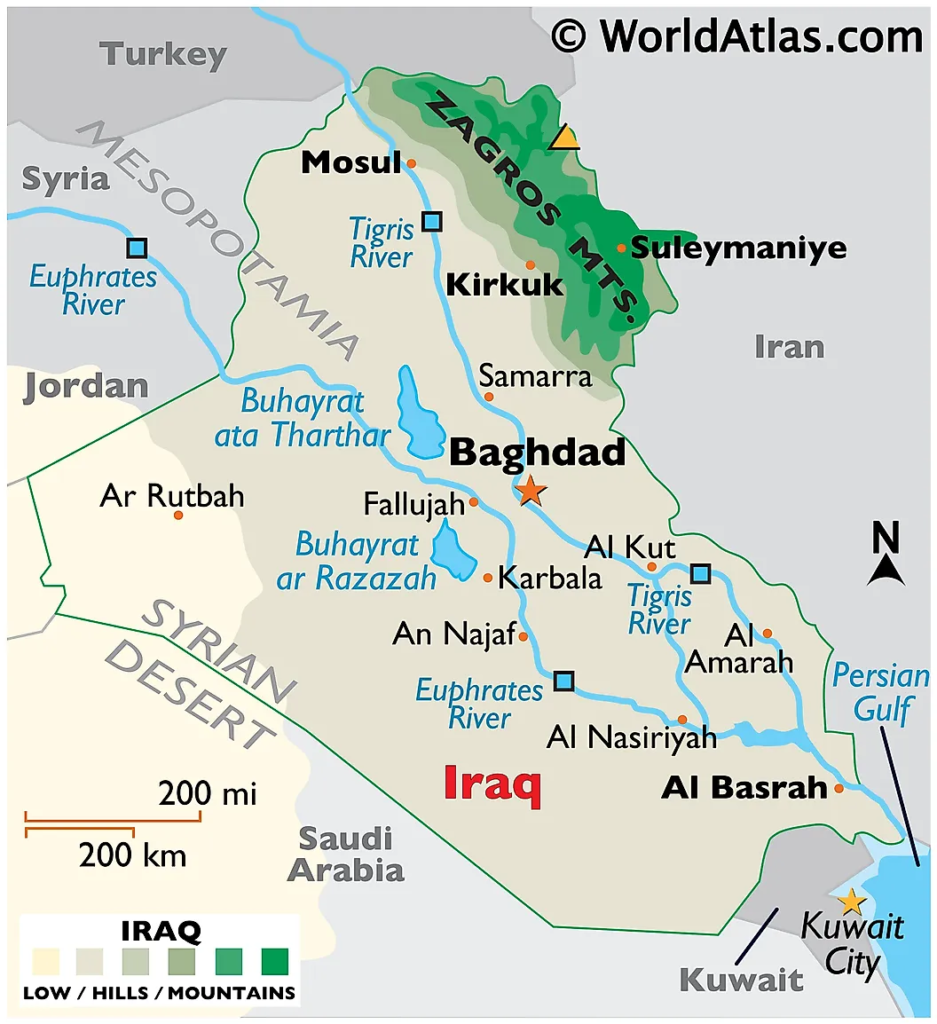
Modern day map of Iráq showing Najaf and Karbalá’. In the 1800s this area was part of the Ottoman empire. The capital of the Ottoman Empire was Constantinople (modern Istanbul, Turkey). Persia (modern day Írán) was ruled by the Qájár dynasty in the 1800s. Tihrán was their capital. Persia was mainly Shí’a Islam while the Ottoman empire was mainly Sunní Islam. A few areas in the Ottoman empire, such as Najaf and Karbalá’, did have a significant Shí’a population and do so to this day. Map of the Ottoman Empire is shown in the next Section (DB 1-2, Section 2).
3 Archival painting from Dawn-Breakers Chapter 1, p1
4 Najaf and Karbalá’ are in modern day Iráq. In the 1800s this area was part of the Ottoman empire and separate from Persia [modern Írán]. The Ottoman empire was ruled by the Caliphate and had its capital in Constantinople [modern Istanbul, Turkey]. Persia was ruled by the Qájár dynasty who had Tihrán as their capital. The Ottoman empire was mainly Sunní Islam. The Qájár empire was mainly Shí’a Islam. [For an overview of the basic tenets of Islam and the Shí’a, see Appendix: Brief Background on Shí’a Islam.]