

 Table of Contents


school as a youth in Khurásán’s largest city, Mashhad in Razaví Khurásán. Mullá Husayn was therefore very familiar with the people and customs of that province.
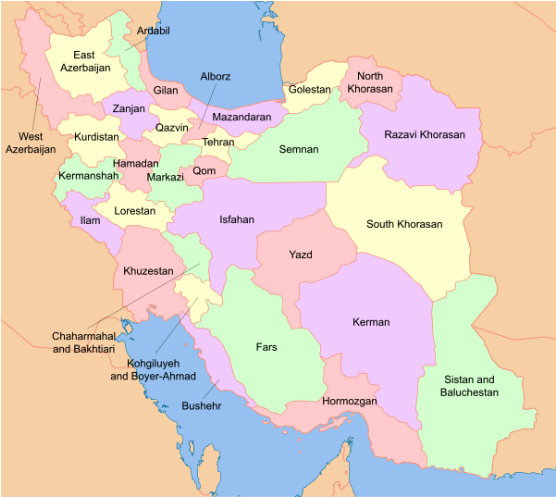
Map of the thirty-one provinces of Írán in 2025. Cities are not shown in this map.
Note on differences between these provinces: The provinces differ, in some instances quite markedly, in their geography: some are mountainous and cold (in the north); some have lot of rain and lush lands; some in the southern parts are arid and even desert-like; and so forth. The provinces also differ from each other to varying degrees in their customs, clothing, food, language dialect, music and so forth. In the 1800s, the regional/tribal/clan identity was still quite a dominant social factor. Remnants of this remain to this day and in some instances are the cause of prejudice. The Persian/Iranian civilization and empires go back to over 2500 years ago, which is well before birth of Islam in Arabia in 610 CE. Persians/Iranians are quite different from the Arabs in many dimensions: ethnically, culturally, and religiously (pre-Islam, Persians were mainly Zoraostrians, while post-Islam, Iran, in time, became mainly Shí’a while the Arabs are mainly Sunní). Persians/Iranians are also distinct from the Turks, although in the northeastern provinces there is a large Turkish influence and often Turkish is even spoken in many of the homes.
127 / 803