

 Table of Contents


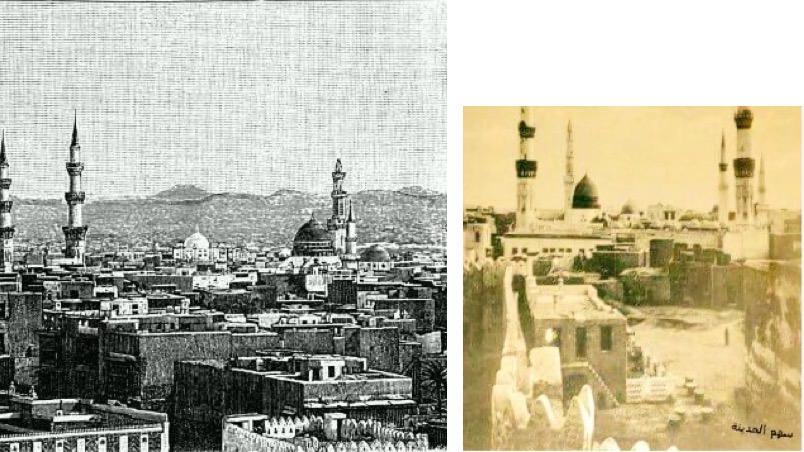
Medina. Archival drawing [left] and photo [right] of the sacred mosque Al-Masjid An-Nabawī in Medina where the Prophet Muhammad is buried. This site holds profound significance in all Islam, being the second holiest site on earth after the Ka’ba in Mecca.
Mírzá Muhít got a final chance near the end of his life to cross the Bridge. At that time, he was residing in Iraq. On a visit to Baghdád, Mírzá Muhít, feigning submission to Bahá’u’lláh, expressed, through one of the Persian princes who lived there, a desire to meet Bahá’u’lláh. Mírzá Muhít, however, requested that no one else should know about his proposed meeting with Bahá’u’lláh. On receiving Mírzá Muhít’s meeting request with its conditions, Bahá’u’lláh’s reply was this:
‘ Tell him that in the days of My retirement in the mountains of Sulaymáníyyih , I, in a certain ode which I composed, set forth the essential requirements from every wayfarer who treads the path of search in his quest of Truth. Share with him this verse from that ode:
155 / 803